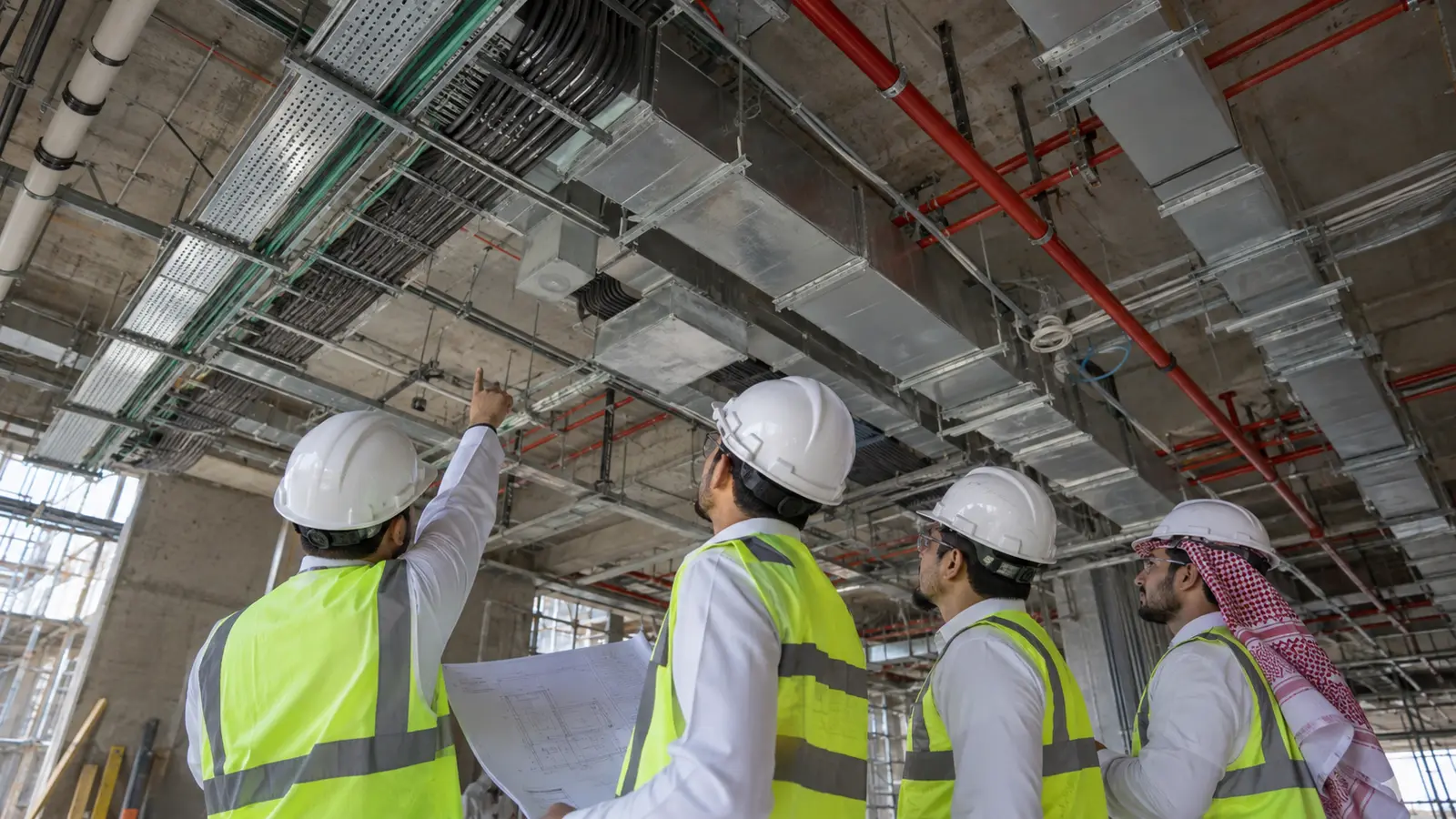
Learn how early MEP coordination can reduce clashes, protect ceiling space, improve access and support smoother mechanical, electrical and plumbing installation.
Learn how early MEP coordination can reduce clashes, protect ceiling space, improve access and support smoother mechanical, electrical and plumbing installation. This article focuses on practical decision-making and project coordination rather than promotional claims, helping clients and project teams understand the issues that can influence delivery in Saudi Arabia.
Why Coordination Matters Before Site Work
Mechanical, electrical and plumbing systems compete for limited space above ceilings, inside shafts, in plant rooms and along service corridors. If routing is resolved only during installation, clashes can delay multiple trades.
Early coordination creates a shared understanding of service zones, equipment locations, access requirements and structural openings before work reaches site.
Coordinate Major Routes First
Large ducts, drainage lines, cable trays and major pipework usually have less flexibility than small services. Establishing primary routes first gives the design a practical hierarchy.
The team can then coordinate secondary services around them while preserving required clearances, slopes, fire separation and maintenance access.
Protect Maintainability
A system that fits physically is not necessarily maintainable. Valves, filters, panels, dampers and equipment need access for testing, servicing and replacement.
Coordination reviews should therefore consider both installation and future operation. This can prevent access panels being blocked or equipment being trapped behind other services.
Builders Work and Structural Openings
MEP systems often require sleeves, openings, plinths, trenches and supports that affect civil and structural works. These requirements should be issued early and tracked through coordinated drawings.
Late openings can lead to cutting, redesign or strengthening. Early builders-work coordination reduces this risk.
From Coordination to Installation
Approved coordinated drawings should be translated into clear work packages for site teams. Changes discovered during installation need controlled review so one trade does not solve a problem by creating another.
Regular coordination meetings and updated as-built information help maintain alignment through testing and commissioning.
Strong project outcomes are usually created by early coordination, clear technical information and disciplined execution across the full delivery team.
Frequently Asked Questions
What is an MEP clash?
A clash occurs when two systems, or a system and a structural or architectural element, occupy conflicting space.
Does MEP coordination only happen in BIM?
No. BIM can improve coordination, but the underlying process also includes drawings, schedules, site reviews and multidisciplinary decision making.
Why is maintenance access part of coordination?
Equipment and components must remain reachable for operation, testing, repair and replacement after construction.
Discuss Your Project With AJASCO
AJASCO Global Company supports project requirements through its MEP & Electromechanical services and wider engineering, construction and industrial capabilities in Saudi Arabia. For a specific requirement, contact the AJASCO team to discuss the project scope.
Have a Project in Saudi Arabia?
Contact AJASCO Global Company to discuss your mep & building systems requirements.
Contact AJASCO →