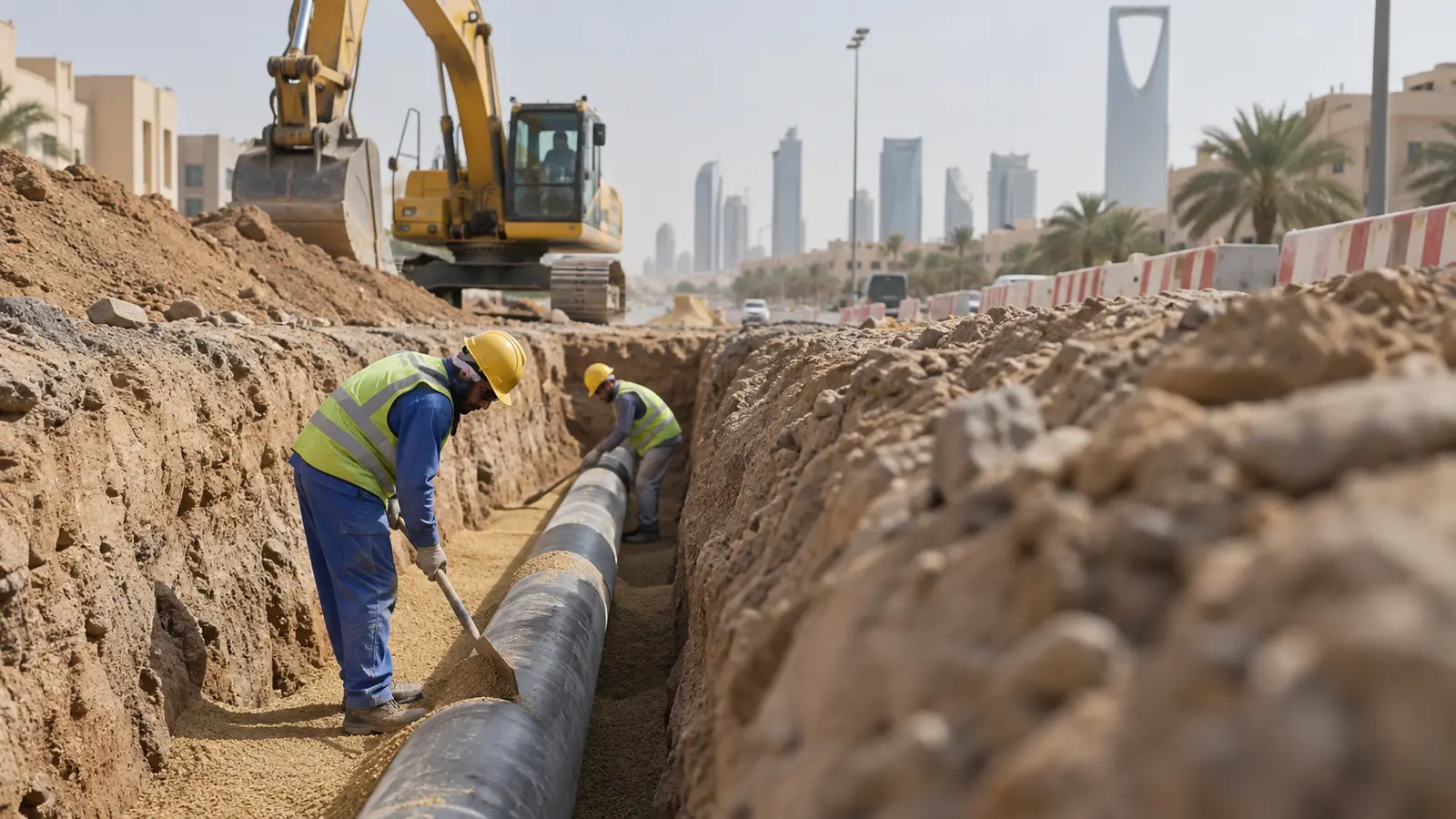
A practical guide to underground pipeline installation covering route planning, excavation, bedding, joining, testing, backfilling and interface coordination.
A practical guide to underground pipeline installation covering route planning, excavation, bedding, joining, testing, backfilling and interface coordination. This article focuses on practical decision-making and project coordination rather than promotional claims, helping clients and project teams understand the issues that can influence delivery in Saudi Arabia.
Route Planning Comes First
Underground pipeline work begins with confirming alignment, levels, crossings, tie-in points and existing utilities. Survey information and approved drawings should be coordinated before excavation starts.
Access for equipment, pipe storage and safe working zones also influence how the route is divided into construction sections.
Excavation and Trench Preparation
Excavation must consider depth, soil conditions, trench stability, dewatering where needed and safe access. The prepared trench should provide the required support and geometry for the pipeline system.
Bedding material and trench levels should be checked before pipe placement because irregular support can affect alignment and long-term performance.
Pipe Handling and Joining
Different pipe materials require different handling and joining methods. Site teams should protect pipe ends, coatings or surfaces from damage and follow approved procedures for alignment and connection.
Quality records for joints and inspections provide traceability before the line is covered.
Testing Before Backfilling
Inspection and testing should be completed at the stages defined by the project requirements. It is easier to correct issues while the pipeline remains accessible.
Pressure testing, visual inspections or other checks should follow the applicable project specification and approved method statement.
Backfilling and Reinstatement
Backfill material, compaction and protection requirements should be controlled to avoid damaging the installed line. Markers, warning tapes or protective systems may be required depending on the application.
Final reinstatement should coordinate with roads, paving, landscaping, fences and other external works sharing the same corridor.
Strong project outcomes are usually created by early coordination, clear technical information and disciplined execution across the full delivery team.
Frequently Asked Questions
Why are utility surveys important before excavation?
They help identify existing services and reduce the risk of unsafe or disruptive conflicts.
When should pipeline testing occur?
Testing should follow the approved project procedure and is commonly completed before final backfilling where access is still available.
What affects trench design?
Depth, soil conditions, pipe type, groundwater, adjacent loads, safety requirements and project specifications can all influence the approach.
Discuss Your Project With AJASCO
AJASCO Global Company supports project requirements through its Pipeline & Infrastructure services and wider engineering, construction and industrial capabilities in Saudi Arabia. For a specific requirement, contact the AJASCO team to discuss the project scope.
Have a Project in Saudi Arabia?
Contact AJASCO Global Company to discuss your pipeline & infrastructure requirements.
Contact AJASCO →