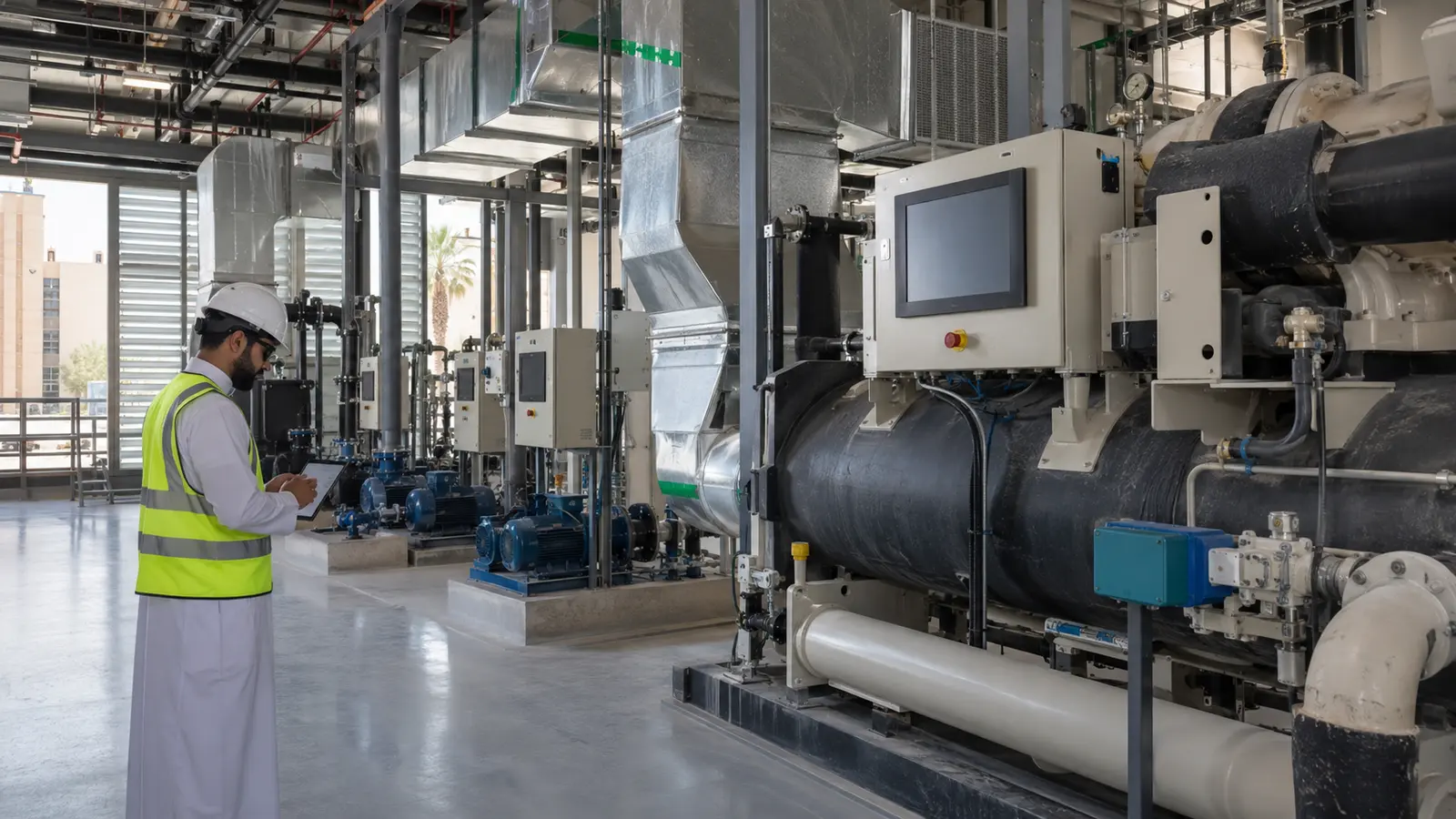
Understand how building management systems can interface with HVAC equipment, sensors, controls and alarms to support coordinated building operation.
Understand how building management systems can interface with HVAC equipment, sensors, controls and alarms to support coordinated building operation. This article focuses on practical decision-making and project coordination rather than promotional claims, helping clients and project teams understand the issues that can influence delivery in Saudi Arabia.
BMS Is an Integration Layer
A building management system can provide centralized visibility and control for selected building services. In many projects, HVAC is one of the largest areas of integration because it includes equipment, sensors, setpoints and operating schedules.
The value of the BMS depends on clear control intent and accurate coordination between mechanical equipment, controls and network infrastructure.
Define Points and Control Sequences
Before installation, the project team should define which equipment points will be monitored or controlled. These may include temperatures, pressures, statuses, alarms, valve positions and operating commands.
A points list and sequence of operation create a shared reference for the mechanical, controls and commissioning teams.
Sensors and Field Devices
Sensors only provide useful data when they are correctly selected, located, installed and calibrated. Poor sensor placement can lead to misleading readings and unstable control.
Field devices also need power, communication and accessible installation locations for future maintenance.
Interfaces With HVAC Equipment
Chillers, air handling units, pumps, fan coil units and other equipment may communicate with the BMS through hardwired points or digital protocols depending on project design.
Interface responsibilities should be clear so equipment suppliers, controls contractors and MEP teams know who provides each component and connection.
Commissioning the Integration
BMS commissioning should verify both individual points and the complete control sequence. Simulated alarms, command tests and trend review can help confirm that the system responds as intended.
Operator training and clear graphics are also important so the completed system can be used effectively after handover.
Strong project outcomes are usually created by early coordination, clear technical information and disciplined execution across the full delivery team.
Frequently Asked Questions
Does a BMS control every building system?
Not necessarily. The project design defines which systems and points are integrated.
What is a sequence of operation?
It describes how equipment and controls should respond under different operating conditions.
Why is commissioning important for BMS?
Because correct wiring alone does not prove that sensors, logic, alarms and equipment responses work together as intended.
Discuss Your Project With AJASCO
AJASCO Global Company supports project requirements through its Building Management Systems services and wider engineering, construction and industrial capabilities in Saudi Arabia. For a specific requirement, contact the AJASCO team to discuss the project scope.
Have a Project in Saudi Arabia?
Contact AJASCO Global Company to discuss your bms & automation requirements.
Contact AJASCO →